Have you ever received a message saying “YW” and wondered what it meant? You’re not alone.
Text messaging is full of short forms and internet slang that can be confusing if you’re not familiar with them. A simple two-letter reply like YW might seem mysterious at first, but it’s actually one of the easiest texting abbreviations to understand.
In this guide, you’ll learn what YW means in text messaging, why people use it, where you’ll see it, and how to use it naturally in your own conversations.
What Does YW Mean in Text Messaging?
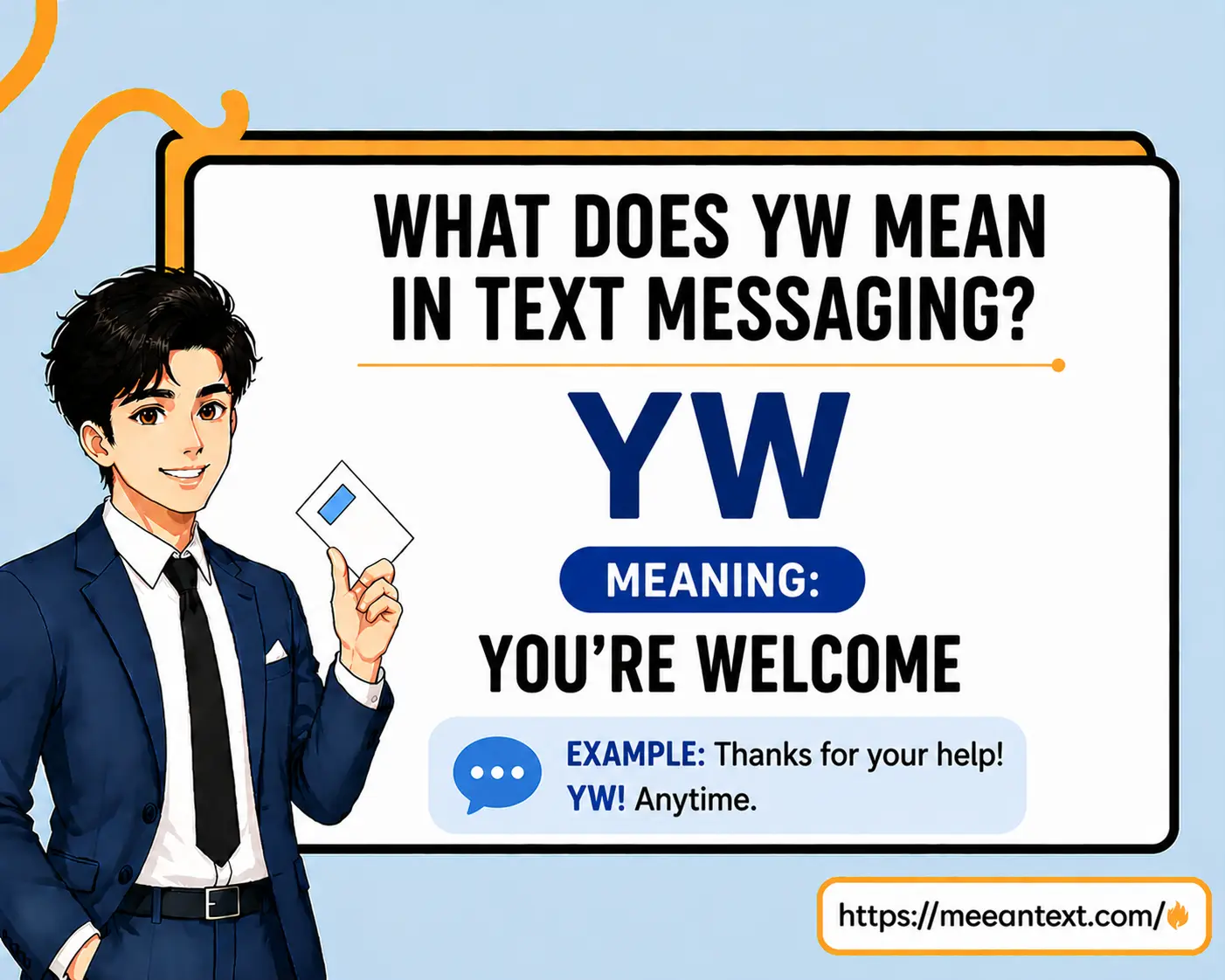
YW stands for “You’re Welcome.”
It is a short and friendly reply people send after someone says “Thank you” or “Thanks.” Instead of typing the full phrase, many people simply type YW to save time.
Featured Snippet Answer
YW means “You’re Welcome” in text messaging. It is a common texting abbreviation used to politely respond when someone thanks you. You’ll often see it in text messages, social media chats, gaming conversations, and messaging apps.
Simple Meaning of YW
In simple words, YW is just a quicker way of saying “You’re welcome.”
It carries the same meaning as the full phrase. The only difference is that it’s shorter and faster to type.
For example:
Person A: Thanks for helping me today!
Person B: YW! 😊
The message still sounds polite, even though it’s much shorter.
Where Is YW Used?
You can find YW almost anywhere people chat online.
Text Messages
Friends and family often use it during everyday conversations.
Example:
- Thanks for picking me up.
- YW!
Social Media
People use it on platforms like:
- X (Twitter)
- Snapchat
- TikTok
It usually appears in comments, direct messages, or replies.
Messaging Apps
You’ll also see YW on:
- Messenger
- Telegram
- Discord
Because these apps are designed for quick conversations, abbreviations like YW are very common.
Online Gaming
Gamers often reply with YW after helping teammates.
Example:
- Thanks for the backup!
- YW 👍
Why Do People Use YW?
People prefer YW because it makes conversations faster without changing the meaning.
Some common reasons include:
- ✅ It saves typing time.
- ✅ It keeps conversations moving.
- ✅ It feels casual and friendly.
- ✅ It’s widely understood.
- ✅ It’s perfect for quick replies.
Instead of writing “You’re welcome,” people simply type YW and continue chatting.
Real-Life Examples of YW in Text Messaging
Let’s look at some everyday conversations.
Example 1: Helping a Friend
Sarah: Thanks for sending the notes!
Emma: YW! Hope they help.
Explanation: Emma politely responds after being thanked.
Example 2: Family Chat
Mom: Thanks for buying groceries.
Son: YW ❤️
Explanation: The abbreviation keeps the conversation warm and simple.
Example 3: Work Chat
Coworker: Thanks for fixing the document.
You: You’re welcome!
or
You: YW!
Explanation: In casual work chats, YW is acceptable. In formal business emails, it’s usually better to write the full phrase.
Example 4: Gaming
Player 1: Thanks for the revive!
Player 2: YW 😎
Explanation: Fast-paced games encourage short replies like YW.
Example 5: Social Media
Follower: Thanks for answering my question!
Creator: YW! Glad I could help.
YW vs Similar Texting Terms
Many texting abbreviations have similar purposes. Here’s how YW compares with them.
| Abbreviation | Meaning | When It’s Used |
|---|---|---|
| YW | You’re Welcome | Replying after someone says thanks |
| NP | No Problem | Casual response to thanks |
| NP! | No Problem! | Friendly alternative to You’re Welcome |
| WC | You’re Welcome (less common) | Rarely used today |
| TY | Thank You | Expressing gratitude |
| TYSM | Thank You So Much | Showing extra appreciation |
| THX | Thanks | Informal thank you |
Although all of these appear in texting, YW remains one of the most popular ways to say “You’re welcome.”
When Should You Use YW?
You can safely use YW in many casual situations.
Great times to use it
- Friends
- Family
- Classmates
- Online communities
- Gaming chats
- Social media
- Casual work conversations
Avoid using YW when
- ⚠️ Writing professional emails
- ⚠️ Speaking with clients
- ⚠️ Formal business communication
- ⚠️ Academic assignments
- ⚠️ Official letters
In formal situations, writing “You’re welcome” looks more professional.
Is YW Considered Polite?
Yes.
Even though it’s abbreviated, YW is still viewed as a polite response in casual conversations.
However, tone matters.
Compare these:
Thanks!
YW 😊
Feels warm and friendly.
Versus:
Thanks!
YW
Still polite, but less expressive.
Adding an emoji or an extra word like “Anytime!” can make your response feel more personal.
Common Misunderstandings About YW
Some people misunderstand YW, especially if they’re new to texting slang.
It doesn’t mean “Yes.”
Many beginners think YW starts with “Y,” so it must mean Yes. That’s incorrect.
It isn’t rude
Because it’s short, some people think it sounds cold.
In reality, it’s simply a time-saving abbreviation.
It isn’t used in every situation
While common among friends, it’s not the best choice for professional communication.
Different Ways to Say You’re Welcome
If you don’t want to use YW, here are some friendly alternatives.
- You’re welcome
- No problem
- Anytime
- Happy to help
- Glad I could help
- No worries
- Of course
- My pleasure
Each option works slightly differently depending on the situation.
Pro Tips for Using YW Correctly
🔥 Know your audience.
Use it with people who are comfortable with texting abbreviations.
✅ Keep it casual.
YW works best in relaxed conversations.
✅ Don’t overuse abbreviations.
Too many short forms can make your messages harder to read.
✅ Be professional when necessary.
Choose the full phrase “You’re welcome” for business emails or formal communication.
✅ Add warmth if needed.
Messages like “YW 😊” or “YW! Happy to help.” sound friendlier than a plain “YW.”
Is YW Still Popular?
Yes.
Even with newer internet slang appearing every year, YW continues to be widely used because it’s simple, polite, and easy to recognize.
Most people who regularly text understand its meaning immediately.
Final Thoughts
If you’ve ever wondered what does YW mean in text messaging, the answer is simple: it means “You’re Welcome.”
It’s one of the most common texting abbreviations used after someone says thanks. Whether you’re chatting with friends, replying on social media, or messaging family, YW is a quick, polite, and convenient response.
Just remember that while it’s perfect for casual conversations, writing “You’re welcome” is still the better choice in professional or formal situations.
Frequently Asked Questions (FAQs)
What does YW stand for in text messaging?
YW stands for “You’re Welcome.” It is a short reply used after someone thanks you.
Is YW rude?
No. YW is generally considered polite in casual conversations. However, writing the full phrase may sound warmer in formal settings.
Can I use YW in professional emails?
It’s better not to. Professional emails should usually use “You’re welcome” instead of the abbreviation.
What is the difference between YW and NP?
YW means “You’re Welcome,” while NP means “No Problem.” Both respond to thanks, but NP sounds slightly more casual.