Have you ever received a text that simply said “LOL” and wondered whether the other person was actually laughing? You’re definitely not alone.
Even though LOL has been around for years, people still use it in different ways. Sometimes it means someone found something hilarious. Other times, it’s just a friendly way to keep the conversation light.
In this guide, you’ll learn what LOL means in a text message, why people use it so often, where you’ll see it online, and how to use it naturally without sounding awkward.
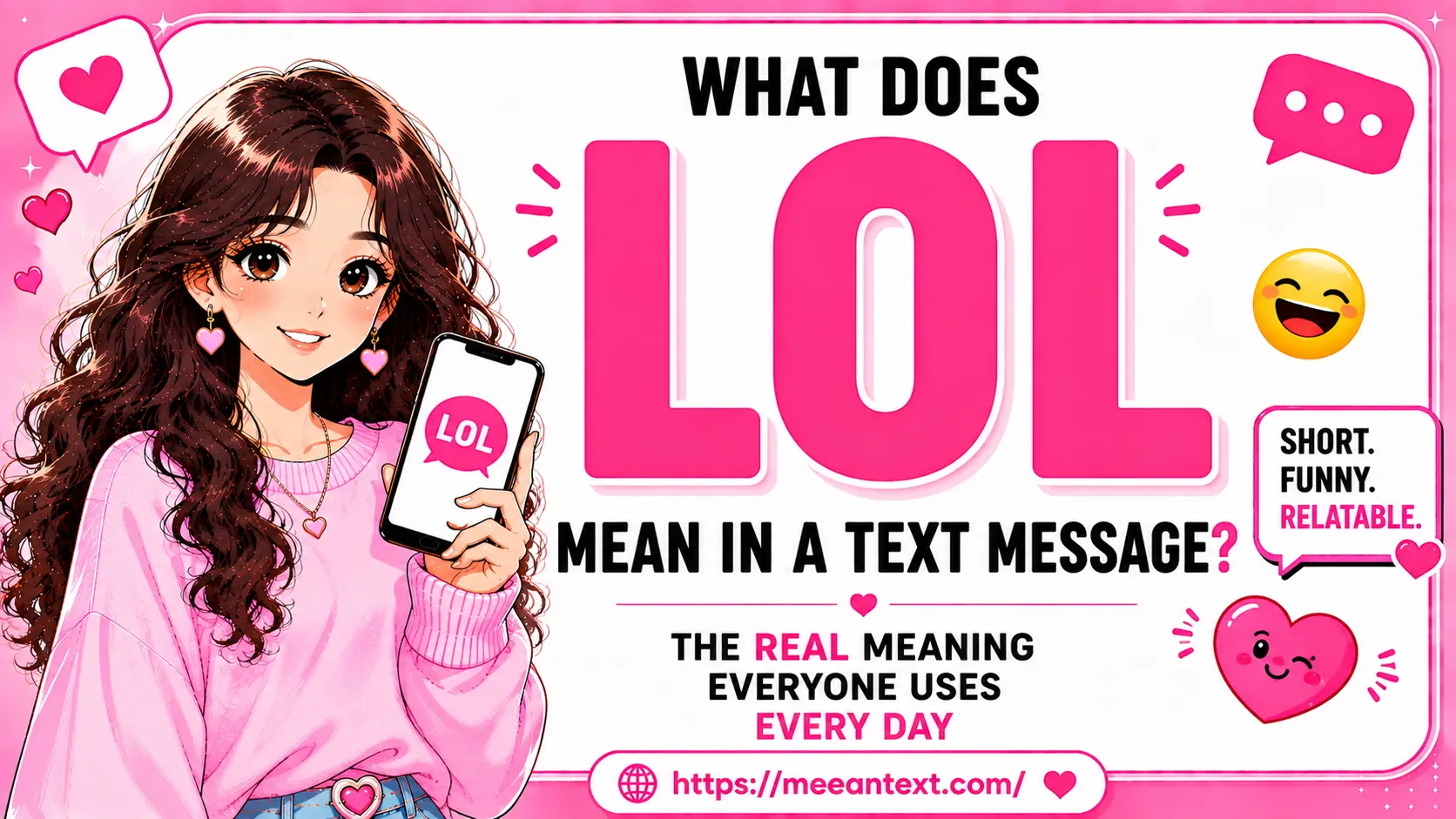
What Does LOL Mean in a Text Message?
LOL stands for “Laughing Out Loud.”
It is one of the most popular texting abbreviations in the world. People use it to show that something is funny, entertaining, or made them laugh.
Featured Snippet Definition
LOL means “Laughing Out Loud” in a text message. It is commonly used to show amusement, respond to something funny, or make conversations feel more friendly and relaxed. In many cases, it doesn’t mean someone is literally laughing out loud.
Simple Meaning of LOL
In simple words, LOL tells someone:
- “That was funny.”
- “You made me laugh.”
- “I’m amused by what you said.”
Sometimes people also use LOL simply to make a conversation feel less serious, even if they aren’t actually laughing.
For example:
Friend: I accidentally wore two different shoes today.
You: LOL, that’s something I would do too!
Here, LOL shows that you found the situation funny.
Does LOL Always Mean Someone Is Laughing?
Not always.
Over time, LOL has evolved beyond its original meaning. Today, many people use it as a conversational expression rather than a literal description.
Depending on the situation, LOL can express:
- Amusement
- Friendly tone
- Awkwardness
- Sarcasm
- Light-hearted conversation
For example:
“LOL, I totally forgot about that meeting.”
The person may not actually be laughing—they’re simply making the message sound more casual.
Where Is LOL Used?
You’ll find LOL almost everywhere people communicate online.
Text Messages (SMS)
This is where LOL became famous.
Example:
“LOL, I can’t believe you said that!”
Friends often use LOL in everyday chats.
Example:
“That video was hilarious LOL.”
Snapchat
People reply to funny Snaps using LOL.
Example:
“LOL 😂 That filter looks amazing!”
You’ll often see LOL in:
- Comments
- Direct Messages
- Story replies
Example:
“LOL this meme made my day.”
TikTok
Users frequently comment:
- “LOL this is so accurate.”
- “I’m literally crying LOL.”
Facebook Messenger
LOL is still common in casual conversations with friends and family.
Discord
Gamers and online communities regularly use LOL while chatting during games.
Why Do People Use LOL?
There are several reasons why LOL remains one of the most popular internet abbreviations.
It Shows Something Is Funny
Instead of typing:
“That really made me laugh.”
People simply write:
“LOL”
It Makes Conversations Feel Friendly
Adding LOL often softens the tone of a message.
Without LOL:
“You’re late.”
With LOL:
“You’re late LOL.”
The second message sounds much less harsh.
It Saves Time
Typing three letters is faster than writing a full sentence.
It Keeps Chats Casual
Online conversations usually move quickly, so abbreviations help messages stay short and natural.
Real-Life Examples of LOL
Let’s look at a few examples.
Example 1
Emma: I spilled coffee on my shirt before work.
Sophia: LOL, that sounds like Monday mornings.
Meaning: Sophia thinks the situation is funny.
Example 2
Friend: Guess who locked themselves out again?
You: LOL 😂
Meaning: You found it amusing.
Example 3
Sibling: Dad still can’t figure out how to use emojis.
You: LOL that’s so true.
Meaning: You’re laughing at a relatable situation.
Example 4
Friend: I accidentally sent that message to my boss.
You: LOL… are you okay?
Meaning: You’re reacting with surprise and amusement.
LOL vs Similar Texting Slang
Many internet abbreviations express laughter, but they aren’t exactly the same.
| Slang | Meaning | Level of Laughter |
|---|---|---|
| LOL | Laughing Out Loud | 😊 Light to moderate |
| LMAO | Laughing My Ass Off | 😂 Strong laughter |
| ROFL | Rolling on the Floor Laughing | 🤣 Very intense laughter |
| LMFAO | Laughing Extremely Hard | 🤣 Very strong (informal) |
| STM | Smiling to Myself | Quiet happiness |
| 😂 | Laughing emoji | 😊 Visual laughter |
LOL is usually the safest option because it fits almost any casual conversation.
When Should You Use LOL?
LOL works best in relaxed conversations.
Good situations include:
- ✅ Talking with friends
- ✅ Texting family
- ✅ Replying to memes
- ✅ Funny social media posts
- ✅ Casual online chats
- ✅ Group conversations
Example:
“LOL, I wasn’t expecting that ending!”
When Should You Avoid Using LOL?
Although LOL is extremely common, there are situations where it isn’t appropriate.
Avoid using it in:
- ⚠️ Job applications
- ⚠️ Professional emails
- ⚠️ Academic assignments
- ⚠️ Business reports
- ⚠️ Serious or sensitive conversations
For example, if someone shares sad news, replying with LOL would be inappropriate.
Always consider the context before using internet slang.
Common Misunderstandings About LOL
Many people misunderstand how LOL is used today.
It Doesn’t Always Mean Loud Laughter
Someone may type LOL simply to make the conversation friendlier.
Older and Younger Users May Use It Differently
Some younger users prefer emojis like 😂 or abbreviations like LMAO, while others still use LOL every day.
It Can Sometimes Be Sarcastic
Example:
“LOL sure… that went well.”
Here, LOL doesn’t mean genuine laughter.
Instead, it expresses sarcasm or frustration.
Not Everyone Uses It the Same Way
The meaning often depends on:
- Context
- Relationship with the person
- Tone of the conversation
How to Understand LOL Correctly
Before assuming what LOL means, think about the conversation.
Ask yourself:
- Is the message funny?
- Is the person joking?
- Are they being sarcastic?
- Is the conversation casual?
Context almost always reveals the intended meaning.
Pro Tips for Using LOL
🔥 Keep these tips in mind:
- Use LOL naturally instead of forcing it into every sentence.
- Pair it with emojis when appropriate. 😂
- Avoid using it in formal writing.
- Read the conversation before assuming the tone.
- Don’t overuse LOL, or it may lose its impact.
Using it occasionally makes your messages sound more genuine.
Is LOL Still Popular?
Absolutely.
Even after decades of internet use, LOL remains one of the most recognized texting abbreviations worldwide.
While some people now prefer emojis or newer slang, LOL continues to appear every day on:
- Snapchat
- TikTok
- Discord
- Text messages
Its simplicity is one reason it has remained popular for so long.
Final Thoughts
If you’ve ever wondered what does LOL mean in a text message, the answer is simple: LOL stands for “Laughing Out Loud.” It’s a quick and friendly way to show amusement, react to something funny, or keep a conversation light.
Just remember that modern texting isn’t always literal. Many people use LOL even when they’re only smiling, so paying attention to the conversation’s tone will help you understand its real meaning.
Frequently Asked Questions
What does LOL mean in a text message?
LOL means “Laughing Out Loud.” It is used to show that something is funny or to make a conversation feel more relaxed and friendly.
Is LOL still used today?
Yes. Although many people also use laughing emojis and newer slang, LOL remains one of the most common internet abbreviations across messaging apps and social media.
Does LOL always mean someone is laughing?
No. In many conversations, LOL simply makes a message sound casual or friendly rather than indicating actual laughter.
Can I use LOL in professional messages?
It’s best to avoid LOL in formal emails, business communication, and academic writing. Use it only in casual conversations with friends, family, or online communities.